
You might have expected Love here. The world remembers the forgiveness, the rugby jersey and the jailers at his inauguration. Love is on his map, but it is a place he reached toward. He stands one level below it, at Responsibility.
Responsibility is the cleanest ground on his map, with no shadow at all. But he operated from Order: duty, a word kept at any cost and a cause served first drove his decisions, and the Judge is his main shadow. You may notice that these two sit far apart. The section further down, “Why he stands and operates so far apart”, explains why.
Seeing the whole picture and owning his part in it. It is the cleanest ground on his map, with no shadow at all.
Duty, a word kept at great cost and a cause served first. Discipline carried him through 27 years, and what it cost showed in his family.
The Judge. Active in 7 of 16 statements, the most on his map.

| Level | Healthy side | Shadow side | Shape | Reading | ||||
|---|---|---|---|---|---|---|---|---|
| Owned | Not yet | N/A | Active | Released | N/A | |||
| Belonging | 7 | 9 | 0 | 0 | 16 | 0 | lightly held | |
| Power | 13 | 3 | 0 | 1 | 15 | 0 | healthy, clean | |
| Order | 13 | 3 | 0 | 7 | 9 | 0 | strong, some shadow | |
| Achievement | 9 | 7 | 0 | 3 | 13 | 0 | moderate, some shadow | |
| Community | 11 | 5 | 0 | 5 | 11 | 0 | moderate, some shadow | |
| Responsibility | 13 | 3 | 0 | 0 | 16 | 0 | healthy, clean | |
| Love | 8 | 8 | 0 | 3 | 13 | 0 | lightly held | |
| Bliss | 0 | 0 | 16 | 0 | 0 | 16 | largely disengaged | |
This map of Nelson Mandela has been read from his public life rather than from answers he gave, so treat it as our best reading of the man the world watched. He stands at Responsibility, the cleanest ground on his map, with Power and Order level beneath it. He operates from Order, and his main shadow is the Judge: the cause came first and the cost stayed inside. Love is partly his, and the shadows beneath it keep it a place he reached toward.
Belonging is lightly held, and it carries no shadow. About half of its healthy side is his. He knew where he came from, a village in the Eastern Cape, and he went back to it. Ceremony mattered to him. He kept the traditions that still carried meaning, including the rites of his Xhosa upbringing, and he asked to be buried at Qunu, where he grew up. In prison he grew vegetables, which tells you something about the part of him that needed soil.
What he did not own are the instinctive parts, such as trusting his body before his reasoning, or paying attention to dreams. He went by principle, not by hunch.
Power is strong and almost clean, level with Order and Responsibility at the top of his map. He could let a slight go. He stepped in when someone weaker was being pushed around, held his ground without needing to win, and said a clear no when something crossed his line. He was a boxer, and he liked being physically capable. He questioned authority rather than deferring to it. When he took up armed struggle in 1961, he did it when he believed nothing else would work.
The shadow is one statement. When he was angry, people around him knew about it straight away. By his own account he was hot-headed when he was young, and the discipline of his later life grew partly out of that.
This is where he operated from. He planned ahead and kept something in reserve. He kept his word when it cost him, postponed what he wanted for something that mattered more, and did what he had committed to whether or not he felt like it. He had a clear sense of right and wrong that he had thought through for himself. He respected earned authority and questioned the rest. In prison he kept his habits moderate by choice. He worked a long time for something that would pay off later. Self-discipline gave him freedom. Almost every healthy statement here is his.
The shadow is the biggest on his map, with seven of its sixteen statements. He believed that what he went through then was earning something later. He carried guilt long after events were over, and he was hard on himself when he fell short. He gave up what he wanted because he felt he should, did things out of obligation more than choice, and found real comfort in knowing what was right. He also thought it better not to let feelings show. This is the Judge. It is his main shadow, and it is the level he operated from. His own account of what the struggle cost his family shows it.
The ground under it is solid, so the shadow did not make him unsteady. It made him silent about what it cost.
He feels at home at Responsibility, and he has stabilised there. But the Judge still drove his decisions from underneath, which is why Responsibility is where he stood and Order is where he operated.
Achievement is moderately held, with a small shadow. He made a case and could be persuaded. He thought several moves ahead, changed his mind when the evidence changed, and set himself real goals. In 1952 he opened a law practice in Johannesburg with Oliver Tambo. He wanted to be genuinely good at what he did, and he learned more from what went wrong than from what went right.
The shadow is three statements. He went ahead with plans when the odds were against him, he was good at bringing people round to his way of seeing it, and he was uncomfortable when he was not productive. The first two helped him as a leader. The third explains why he kept working into his eighties.
Community is moderately held, with a visible shadow. He valued people nothing like himself. He wanted every voice heard and could still decide. He gave generously and kept something back for himself, and he could stay connected to a person he disagreed with. He believed people could change, and he said the hard thing when it needed saying. He invited three of his former prison warders to his inauguration in 1994.
The shadow is five statements, the second largest on his map. He believed most people would be good if treated well. He was uncomfortable when someone was left out, found it hard to move on until everyone agreed, and put others’ needs ahead of his own. He would sometimes rather keep the peace than be right. These are the same strengths turned over. The first made him an unusual negotiator, and the third is the other side of the Judge: duty to others before himself.
This is where he stood, and it is the clearest ground on his map. When something went wrong he looked at his own part first. He cared whether something worked more than which camp it belonged to, took the wider consequences into account, and stayed warm toward people while thinking clearly about them. He could see why someone would think the opposite, and he saw that there are usually several workable answers. He followed a rule when it served and set it aside when it did not. He held his views lightly and changed them when it was warranted, and he was content for whoever was most capable to lead. In 1999 he left the presidency after one term and handed over to Thabo Mbeki.
It has no shadow at all. Power and Order are level with it in strength, and below it Belonging is thin and Community carries a visible shadow. Love sits above it, partly in view, with the Judge at Order between them.
Love is partly in view. He wished happiness to people he would never meet, felt warmth toward people at every stage of life and acted when he saw suffering. He could serve without needing to see the difference. He could wish someone well after being hurt by them, and he could forgive someone who had never apologised. His care did not depend on being appreciated. In 1995 he walked onto the field at Ellis Park in a Springbok jersey. That is Love at work.
The shadow is three statements: he would have felt uncomfortable if he had not helped, he kept giving even when it wore him out because he felt he should, and he was kinder to others than to himself. That is the Judge reaching up into Love. With seven shadow statements at Order directly below, Love is a place he reached toward, not one he stood on.
Bliss is not on his radar. His religious background was Methodist, and his life was built on action and relationship, not on the meditative states this level asks about.
Most people do not fit in one box, and Mandela shows why. His map says he stands at Responsibility and operates from Order. That is three levels apart, and it is not a mistake in the map. It is the most useful thing on it.
Where he stands is where he felt at home and saw clearly. He looked at his own part first, weighed the wider consequences and held his views lightly. The Hani address and the handover in 1999 come from here. Where he operates is where his decisions came from when the pressure was on. For him that was Order: a word kept at any cost, a cause served first, and guilt carried long after. Responsibility has no shadow, so nothing there pushed him around. The push came from underneath. A man who can see the whole picture can still act from the Judge.
Other levels could take over too. The map shows smaller shadows at others, and each one has a moment in his life. At Power, when he was angry, people knew about it straight away. By his own account he was hot-headed when he was young, and in 1961 he helped found the armed wing of the ANC. At Achievement, he went ahead with plans when the odds were against him and was good at bringing people round to his way of seeing it. In 1985 he began talks with the government from prison, and he did not tell his closest colleagues first. At Community, he found it hard to move on until everyone agreed, and he would sometimes rather keep the peace than be right.
So the honest picture is a person who could act from several levels, depending on the moment. Order was the one that pulled hardest. At his best he stood at Responsibility and saw the whole. Under pressure he could drop to Power, Achievement, Community or Order, and Order was the usual landing place. A map read from outside sees what he did in public. How often each level took over, and when, is beyond it.
Most of us have the same shape. We stand at one level and get pulled down by another. The difference is how far, and how often.
Nelson Mandela stood at Responsibility, with Power and Order level beneath it. The clearest ground on his map is the level of owning his part and weighing the wider consequences. People saw the forgiveness and took it for his centre.
He operated from Order, and that was the Judge. The cause came first and the cost stayed inside, as his own account of what it did to his wives and children shows. The forgiveness is real, and Love is partly his, but the Order shadow beneath it keeps it a place he reached toward. The map shows a man who held himself to a standard that freed a country, and who paid for it privately.
A map should explain a life. Each of these five moments shows a level at work, with its healthy side, its shadow, or both.
On 20 April 1964 Mandela spoke from the dock at the Rivonia trial in Pretoria for about three hours. He said he had fought against white domination and against Black domination. He ended by saying that, if it had to be, he was prepared to die for the ideal of a free and democratic society. On 12 June 1964 he was sentenced to life in prison, not death.
Healthy side: Keeping his word, and giving up what he wanted for something larger.
When 20 April 1964, Pretoria.
In his autobiography, Long Walk to Freedom (1994), Mandela wrote about what the struggle cost his wives and children. His first marriage, to Evelyn Mase, ended in 1958, and his second, to Winnie, in 1996. He wrote that his children grew up without his guidance, and that being the father of a nation was a great honour but being the father of a family was a greater joy, one he had too little of. He chose the cause each time, and he judged himself for it afterwards.
Shadow side: The Judge. He gave up what he wanted because he felt he should, and he carried the guilt for years.
When 1950s to 1990s, written in 1994.
On 31 January 1985 President P. W. Botha offered to release Mandela if he would reject violence as a political weapon. Mandela refused. On 10 February 1985 his daughter Zindzi read his reply to a crowd at Jabulani Stadium in Soweto. It said he could not give any undertaking while he and the people were not free. He stayed in prison until 11 February 1990.
Healthy side: A clean no when something crossed his line, and holding his ground without needing to win.
When 10 February 1985, Soweto.
Chris Hani, a leader of the South African Communist Party, was shot dead outside his home in Boksburg on 10 April 1993. South Africa was close to violence. Mandela, not yet president, went on television and asked all South Africans, Black and white, to stay calm and honour Hani by keeping the peace.
Healthy side: Taking the wider consequences into account, including ones far from him.
When 10 to 13 April 1993.
The Springboks had long been a symbol of white rule for many Black South Africans. On 24 June 1995, at Ellis Park in Johannesburg, Mandela walked onto the field in a Springbok jersey with the captain François Pienaar’s number 6. After South Africa won the Rugby World Cup final, he presented the trophy to Pienaar.
Healthy side: Wishing well to people on the other side.
When 24 June 1995, Johannesburg.
Mandela showed that a person can give everything to a cause and still turn out generous to the people who hurt him. The map shows what that cost the people closest to him. Where in your own life is a duty taking something that belongs to the people nearest to you?
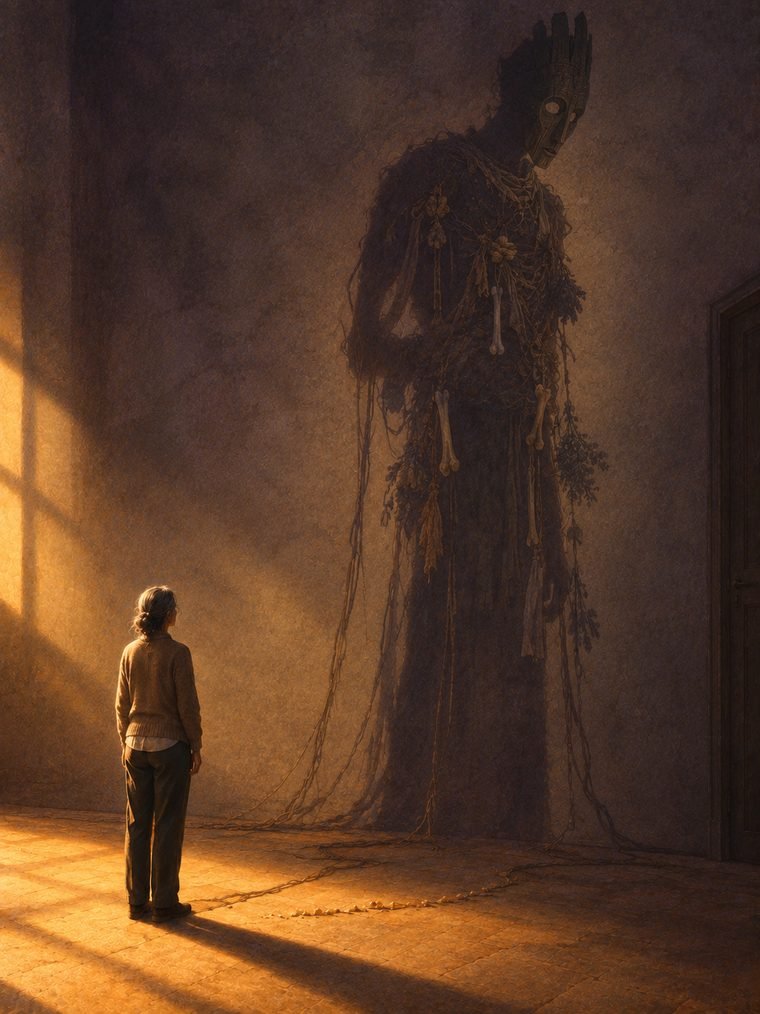
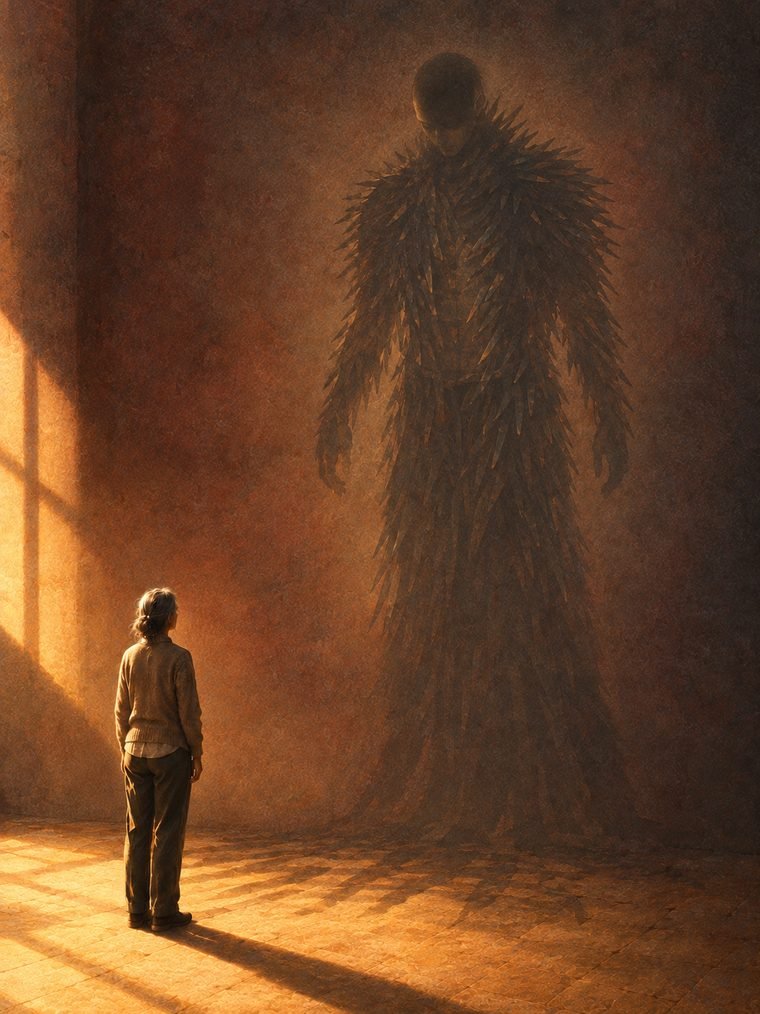
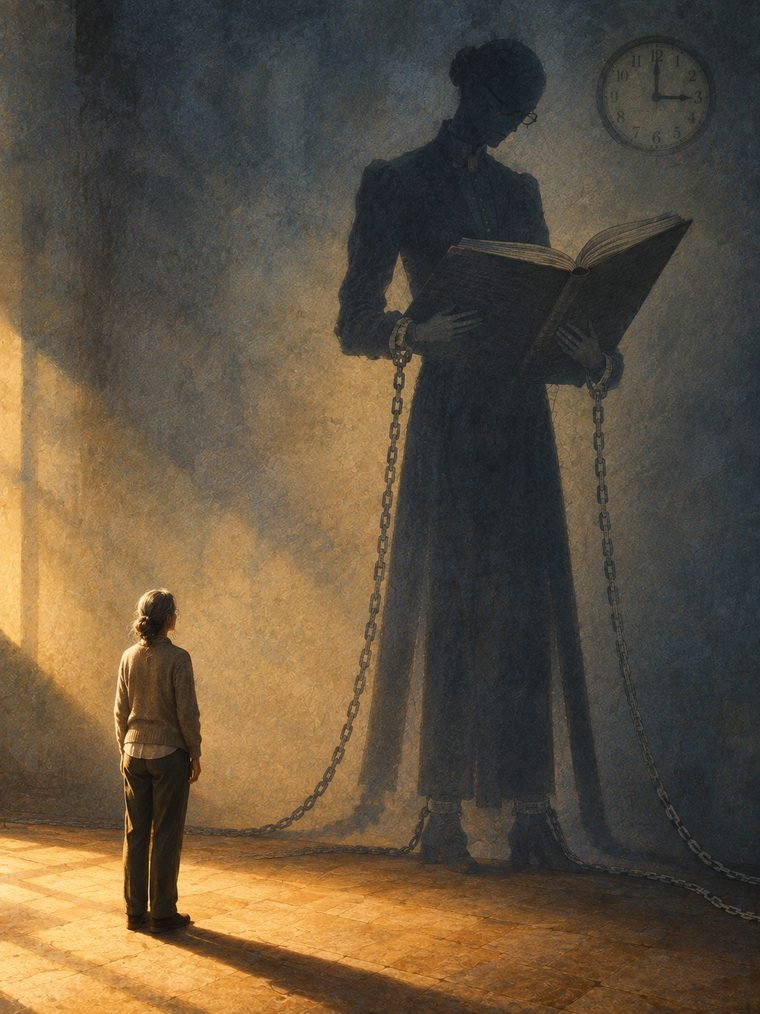
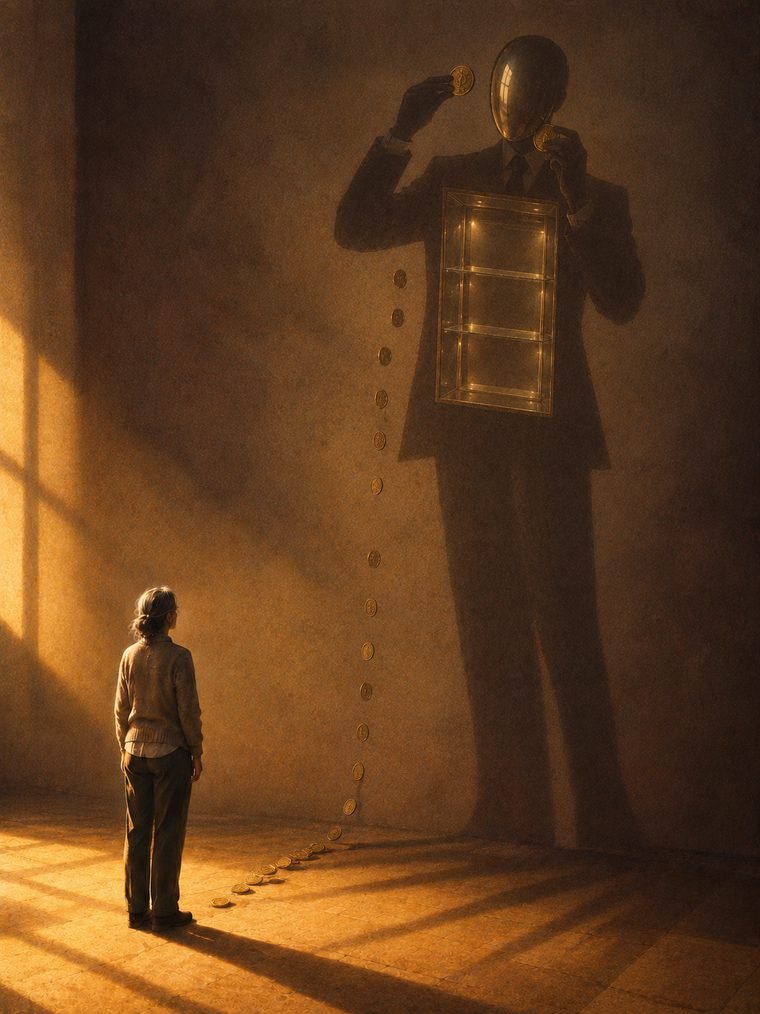
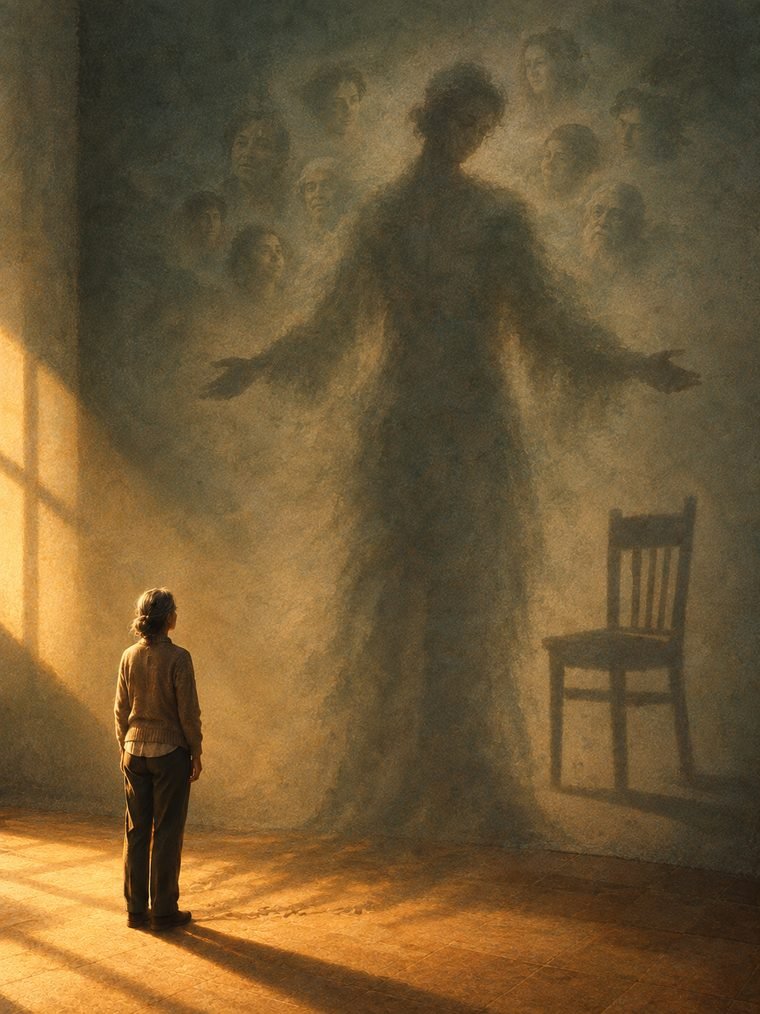
Mandela’s main shadow is the Judge. Everyone has a main shadow, and it is rarely the one you would guess. The Awaken Survey places you on the same ten-level map, draws your own eight windows, and names the shadow creature that is yours.
256 statements · 20 to 25 minutes · free · every map is read personally by Peter