
This map puts Marilyn at Achievement, and that will surprise most people. They picture her as the dumb blonde she played, or the fragile woman who was easily hurt. So you would expect her map to sit at Community, with the people who feel everything, or lower down with the frightened child she had been.
She did feel everything, and Community is where she operated from. But the level she stood on, where she was most at home, is Achievement. She studied her craft for years, managed her own image better than the studio did, and in 1954 walked out on the biggest studio in Hollywood to start her own film company. A year later she came back on her own terms. The dumb blonde was one of the most ambitious and strategic women in Hollywood.
Mastery and ambition. She wanted to be good, and to be taken seriously.
Mostly from its shadow side. Her decisions came from the need to be loved.
The People-Pleaser. Active in 10 of 16 statements, the most on her map.

| Level | Healthy side | Shadow side | Shape | Reading | ||||
|---|---|---|---|---|---|---|---|---|
| Owned | Not yet | N/A | Active | Released | N/A | |||
| Belonging | 6 | 10 | 0 | 3 | 13 | 0 | lightly held | |
| Power | 9 | 7 | 0 | 3 | 13 | 0 | moderate, some shadow | |
| Order | 6 | 10 | 0 | 3 | 13 | 0 | lightly held | |
| Achievement | 9 | 7 | 0 | 8 | 8 | 0 | moderate, some shadow | |
| Community | 8 | 8 | 0 | 10 | 6 | 0 | lightly held | |
| Responsibility | 4 | 12 | 0 | 3 | 13 | 0 | lightly held | |
| Love | 5 | 9 | 2 | 2 | 12 | 2 | lightly held | |
| Bliss | 0 | 0 | 16 | 0 | 0 | 16 | largely disengaged | |
This map of Marilyn has been read from her public life rather than from answers she gave, so treat it as our best reading of the woman the world watched. She stands at Achievement: her drive to be genuinely good, her long study of her craft and her clear eye for the next move. Power sits right beside it, and it gave her the courage to take on people far bigger than her. She operates from Community, mostly from its shadow, the need to be loved. That is her main shadow. Under pressure Achievement’s own shadow came out as well: the need to prove herself and be taken seriously. Most people missed her ambition. The map shows what it was protecting.
Belonging is thin, and her childhood explains why. Norma Jeane grew up in foster homes and spent almost two years in an orphanage while her mother was in hospital. She never met her father. What she did own here is telling. Family mattered to her, and she paid for her mother’s care for the rest of her life. She loved animals. She took her dreams seriously enough to bring them to her analysts.
There is not much shadow here, but it is the oldest on the map. The world felt unpredictable to her, her body carried feelings she could not account for, and she feared the illness that had taken her mother.
Power is nearly as strong as Achievement, and it is where her courage came from. She questioned authority instead of deferring to it, acted decisively when it counted, said a clear no and stepped in for people who were being shut out. She would rather try and fail than never find out. She enjoyed her body and her appetites without shame. And she was fiercely loyal to the few who earned it: she left most of her estate to her acting teacher, Lee Strasberg.
Not much shadow here either. Being made to look foolish was hard for her to take, and she acted first and dealt with the consequences later. What she did not own tells you as much. She could not let a slight go easily, being wrong in public could undo her, and she never learned to look after her own needs without leaning on someone else.
Order never became solid ground. She had a sense of right and wrong she had worked out for herself, she respected teachers who had earned it, and she would work for years for something that paid off later. In 1955 she put her film career on hold to study acting in New York. When an old nude photograph turned up on a calendar, she told the truth instead of denying it.
What she did not own is the daily discipline: planning ahead, keeping commitments when she did not feel like it, moderate habits. Her lateness on set became famous. What shadow there is turned inward. She was very hard on herself when she fell short, spent a lot of time thinking about what might go wrong, and carried guilt long after the event.
This is where she stood. She wanted to be genuinely good at what she did, wanted her work to be worth something in every sense, set real goals and met them, and saw possibilities where other people saw a girl from an orphanage. She took calculated risks and stood behind them, and she thought several moves ahead: she handled her own publicity better than the studio did. She studied with Lee Strasberg, read widely and worked on a scene until it was right.
The shadow is nearly as busy as the gift. Recognition mattered to her more than she let on, failing in public frightened her, and she wanted to be visibly the best. Much of her worth hung on being taken seriously. This is the Trophy Hunter. It is the second biggest shadow on her map, and under pressure it came out. The ground under this level was also thin. Belonging and Order are both lightly held, so her standing here was never steady, and when it slipped she fell back on the need to be loved.
Her warmth was real, and the healthy side shows it. She valued people nothing like her and challenged authority that was used unfairly. In 1955 she helped Ella Fitzgerald get booked at the Mocambo, a Hollywood club that had not booked her before. She stayed friends with Joe DiMaggio after their divorce. And her inner work, years of analysis and acting study, went straight into what she did on screen.
The shadow is the biggest on her map: ten of its sixteen statements. It mattered a great deal to her that people liked her. She became whatever the other person needed: the studio’s blonde, a husband’s ideal wife, the crowd’s Marilyn. She took on other people’s feelings until she lost track of her own, looked for the good in people when the evidence was mixed, and stayed away rather than have a hard conversation. This is the People-Pleaser, her main shadow, and it is the level she operated from. What she did not own is the level’s balance: being close to someone without losing herself, and caring about someone while still seeing them clearly.
Responsibility is lightly held. She met people where they were, from film crews to fans, and she would learn something dull when the work needed it. Twice she started again from scratch: once when Norma Jeane became Marilyn, and again in New York.
The shadow is quiet but telling. She was still working out who she really was, and she felt she would be free if her circumstances were different. She learned best when a subject caught her interest, and she taught herself that way, through books, after leaving school at sixteen to marry.
Her care went beyond the people she knew. She did something when she saw suffering, felt warmth for strangers, and could wish someone well after they had hurt her. In 1954 she sang for American soldiers in Korea. But Love in the survey is love that needs nothing back, and that is the part she did not own.
Love's shadow is small and pointed. She was kinder to everyone else than to herself, and she found it hard to be loving and confronting at the same time.
Bliss is not on her radar. Nothing in her public life points toward meditation or stillness as a path.
Marilyn had far more ambition and strength than the world gave her credit for. She stood at Achievement: the drive to be good, to be taken seriously and to run her own career. Power stood right beside it and gave her the nerve to say no to the studio, start her own company and come back on her own terms. But the ground under both was thin. Belonging was lost in childhood, and Order never became a steady floor.
She operated from Community, mostly from its shadow. The need to be loved shaped her marriages, her image and the woman she played for the cameras. When that need felt threatened she reached for the Trophy Hunter and tried to prove herself through her work. Her ambition was real, and much of the time it went into protecting a need that applause never filled.
A map should explain a life. Each of these five moments shows a level at work, with its healthy side, its shadow, or both.
A nude photograph she had posed for in 1949 turned up on a calendar, and the studio wanted her to deny it. She admitted it was her and said she had needed the money for rent. The public took her side, and her career went up, not down.
Healthy side: Saying the awkward thing rather than letting something false stand.
When March 1952, Los Angeles.
Tired of being cast as the dumb blonde, she refused a film she thought was beneath her, left Hollywood for New York and announced her own production company with the photographer Milton Greene. A year later Fox signed her to a new contract that gave her approval over her directors.
Healthy side: Taking a calculated risk and owning the outcome, with Power’s courage behind it.
When 7 January 1955, New York. The new contract was signed on 31 December 1955.
Ella Fitzgerald later said that Marilyn rang the owner of the Mocambo and promised to sit at a front table every night if he booked Ella. He did, Marilyn kept her promise, and the press followed her in. Ella said she never had to play a small jazz club again.
Healthy side: Valuing people nothing like her, and pushing on a door that was unfairly shut.
When March 1955, the Mocambo, West Hollywood.
The shoot was hard. Billy Wilder later described lines that needed dozens of takes, and she was often late and afraid of getting it wrong. None of it shows on screen. The film became one of the great comedies, and she won the Golden Globe for best actress in a comedy.
Healthy side: Wanting to be genuinely good, and working at it until it was right.
Shadow side: The Trophy Hunter. Failing in public frightened her, and recognition mattered more than she let on.
When Filmed in 1958. Golden Globe, March 1960.
She left the set of a film that was already behind schedule to sing for John F. Kennedy at Madison Square Garden, in a dress so tight she had to be sewn into it. She gave the crowd exactly the Marilyn they had come for. Weeks later the studio fired her from the film.
Shadow side: The People-Pleaser. Becoming whatever the crowd needed, even when it cost her.
When 19 May 1962, Madison Square Garden, New York.
Ambition and need can live in the same person. Marilyn could take on a studio and still lose herself in what other people wanted from her. Most of us have a version of that: a place where we are brave, and a place where we hand ourselves over. Where do you hand yourself over?
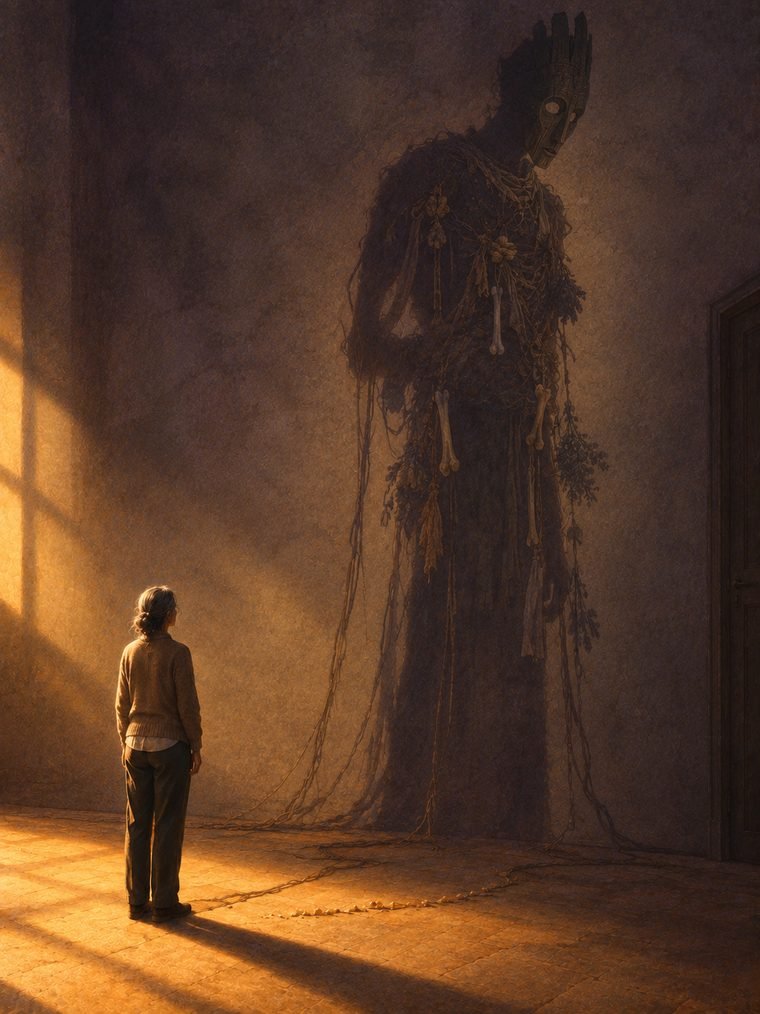
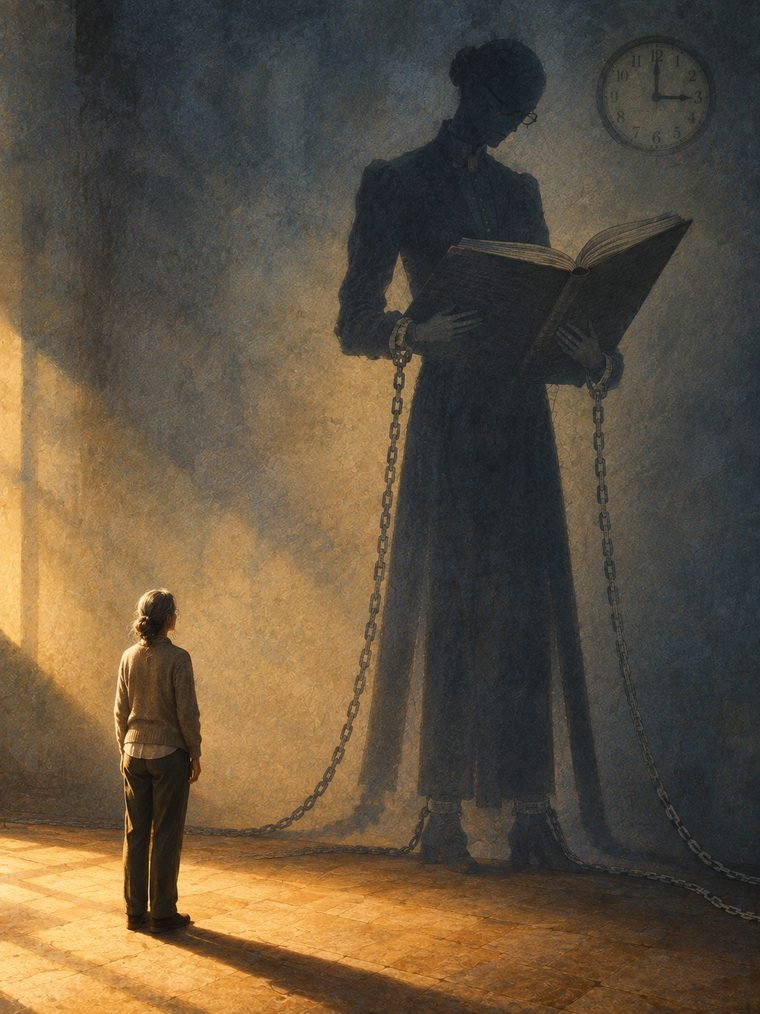
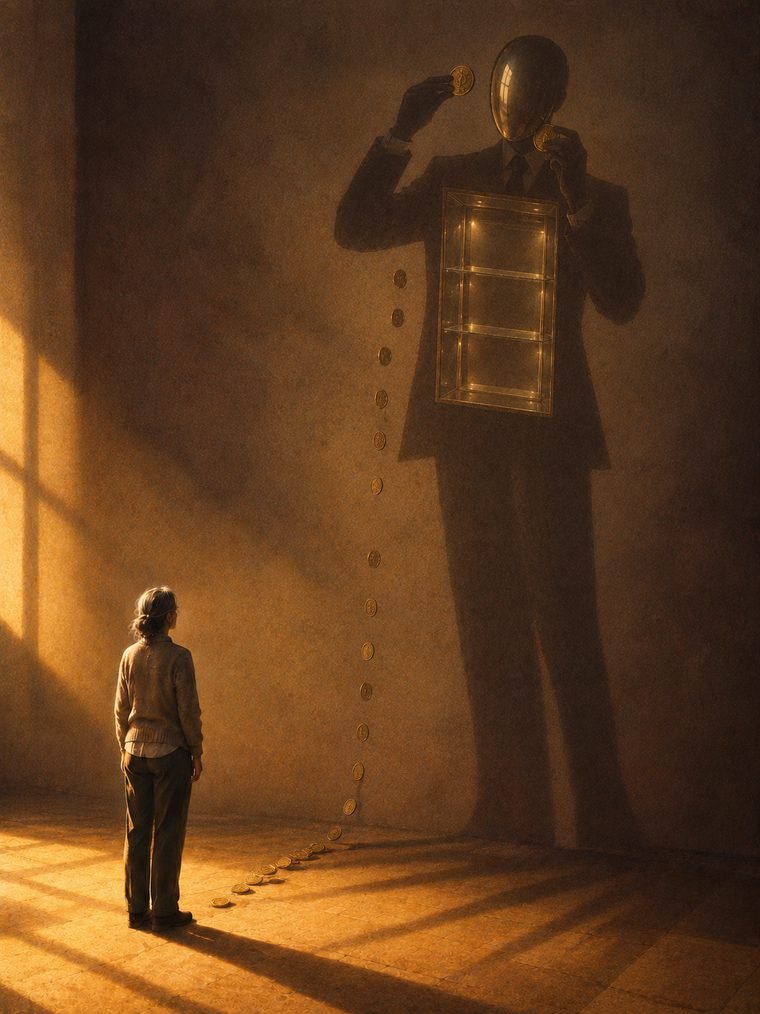
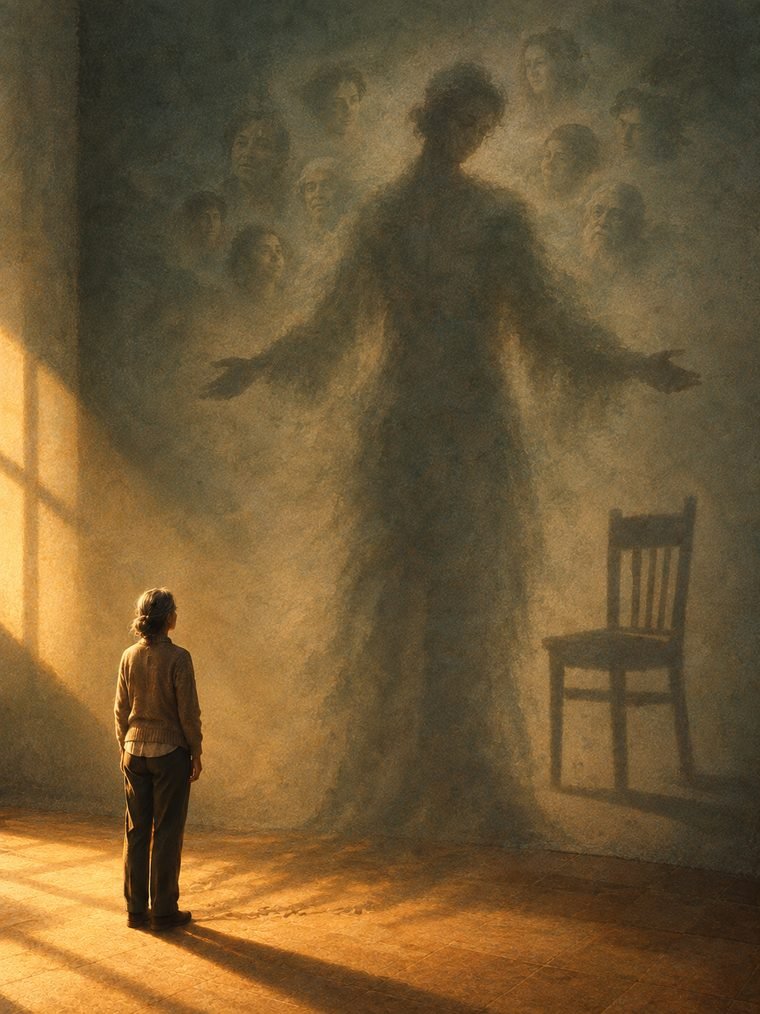
Marilyn's main shadow is the People-Pleaser. Everyone has a main shadow, and it is rarely the one you would guess. The Awaken Survey places you on the same ten-level map, draws your own eight windows, and names the shadow creature that is yours.

256 statements · 20 to 25 minutes · free · every map is read personally by Peter