I’m back from Bali a week early, and many of you will be curious to know how my week of complete darkness went.
It did happen — for about twenty-two hours. Then it was cut very short, and the trip turned into a completely different tale. One that was, I think, just as interesting.
I’m not going to go into the specifics of what happened, for two reasons. Firstly, the immigration department has specifically asked me not to share images or details of the procedure that takes place in a case like this. And secondly, because I’m much less interested in the details of what happened than in how the mind reacts to unexpected and difficult circumstances.
That part turned out to be possibly as valuable as a dark retreat.
The brief tale
I was in Bali for two weeks. The first week was my Inner Growth Retreat, which I was presenting with twelve people. The second week was to be my time in the dark.
During the Inner Growth Retreat, the Indonesian immigration department paid me a visit to check my visa status — and it turned out to be a problem.
I had come in on a tourist visa. For leading meditation classes I needed what’s called a speaking visa, which is the same visa you’d get if you came over to present at a conference.
The following day I spent ten hours in the immigration office, followed by a full day four days later, at which point the decision was made that I would be deported. By then the retreat had finished and I had started my time in the darkness — about twenty-two hours of it, as it turned out.
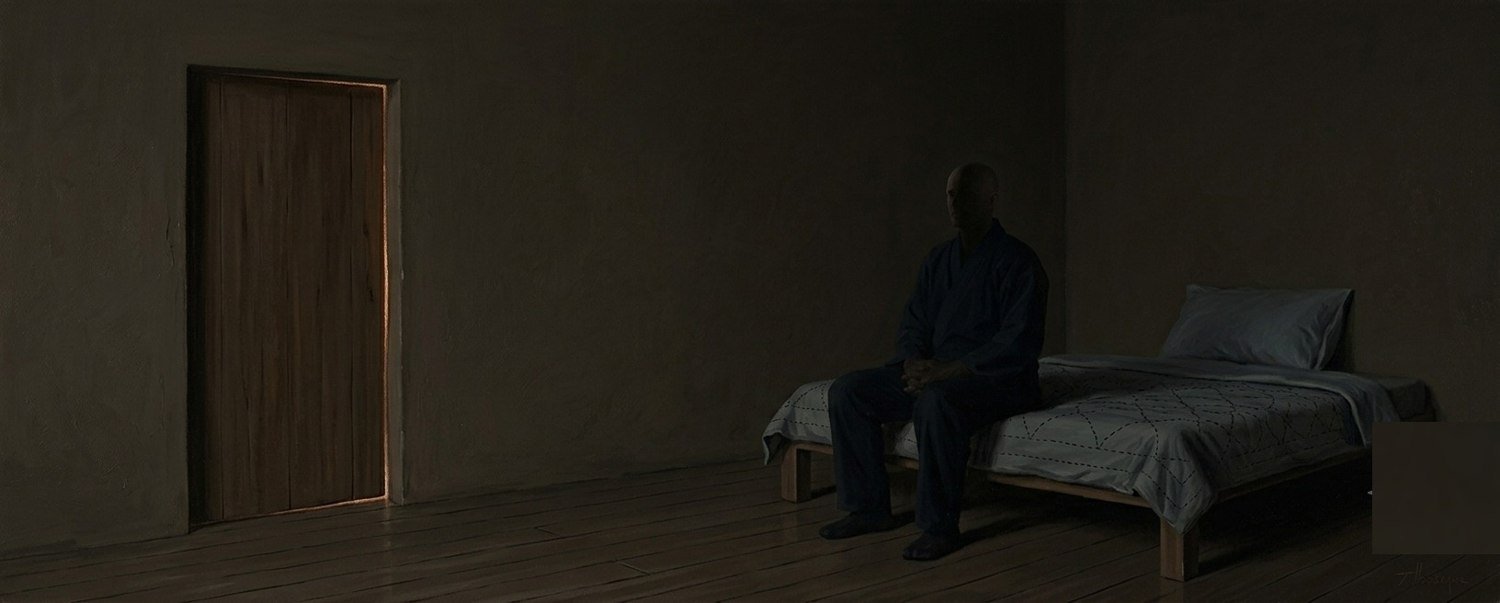
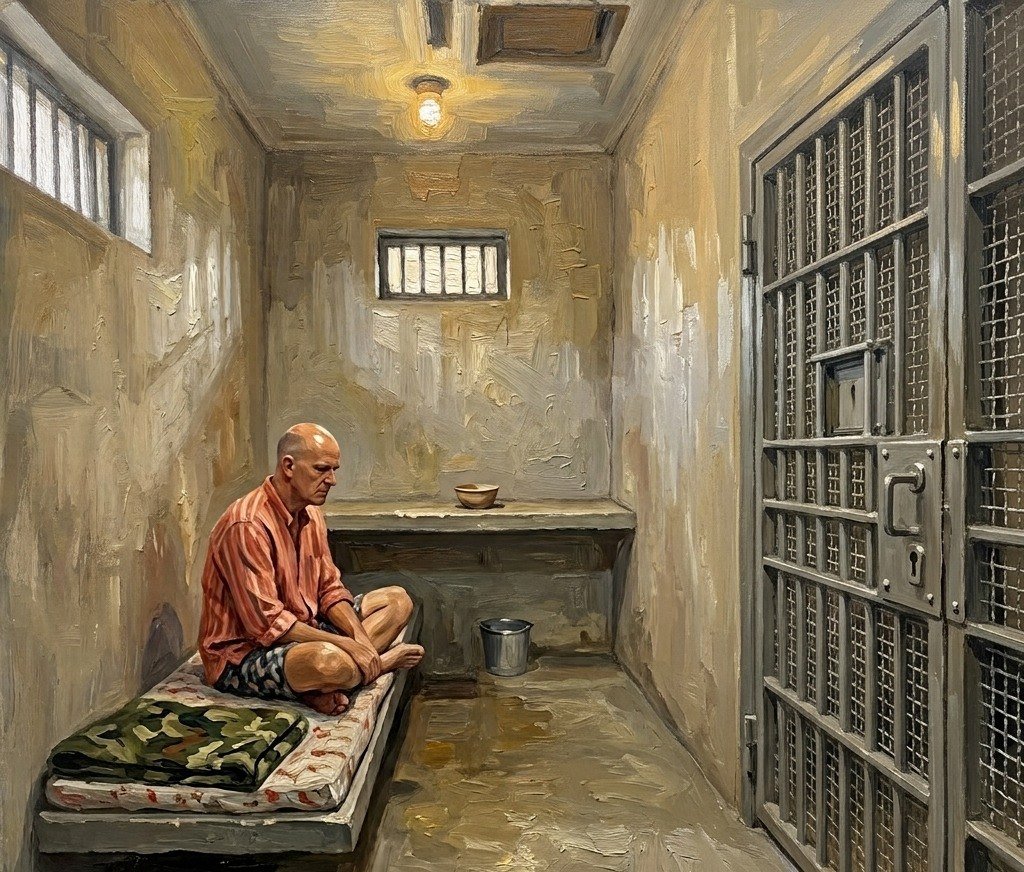
At that point I was put into a cell and all my belongings were taken away. I was left there for the rest of that day, one night and the following day, until all the paperwork was done. Finally I was transported overnight to Denpasar, to catch a 7am flight on the last day.
The cell
The hardest part was not knowing. I knew I was being deported, but I had no idea what that actually meant — how long I would be held, whether I would simply be released at the end of it, or whether there was anything still to come that nobody had mentioned.
I was occasionally able to use my phone for a few minutes, and I’d quickly type out messages to friends and family — either updating them, or asking for help with things like contacting the consulate or booking flights. Otherwise there was nothing to do but wait.
That not-knowing turned out to be the most interesting part of the whole thing. Not the events themselves — what my mind did with them.
Choosing discomfort, and not choosing it
I do enjoy pushing myself outside my comfort zone, because I think that’s where we grow.
But there’s a real difference between choosing something outside your comfort zone and having the choice taken away entirely by an outside force — in this case the Indonesian government. You no longer have any control over where the edge of that zone sits.
In a way that’s the most precious part of it. You’re in a place where you have no option but to cope.
What I found when I went looking
The time that interested me most was the one night I was locked in, with nothing to do but sit with the feelings swirling through my mind.
At a conscious level I was fairly certain I’d be fine. The worst likely outcome was being sent back to Australia and losing some money, either in a penalty or in getting myself home.
But there’s always that (often irrational) voice in the mind that worries about other worst-case scenarios — such as someone in the department setting you up, or penalising you out of all proportion, and so on. That part of the mind was the interesting one.
My goal is to train my mind to a point where I can be equanimous — happy in all circumstances. This was the perfect opportunity to practise.
So in the middle of the night I turned to meditation. I found that I could calm my mind to feel peaceful while I was making an effort — and even foster a small amount of internally generated bliss, which helps a great deal to melt the stress away.
But if I stopped making that effort to keep my mind focused, I’d find quite quickly that I’d start feeling nervous again.
What I understood from this is that there’s a part of the mind, at the unconscious level, that carries on worrying even when you’re not consciously thinking about it. I could be thinking some perfectly random thought while, behind the scenes, another part of my mind continued with the rumination and catastrophising that troubles so many people under stress.
The answer to that is to convince that part of the mind to accept the very thing it’s worried about.
Even if that part is being irrational (such as worrying about being in jail for years, or never seeing your family again). And underneath sit the thoughts we probably fear the most — the death of ourselves, or of the people we love. Which are of course inevitable at some point. So to become truly equanimous, we have to accept even those.
My next job was to work on that part of my mind: first to see that these outcomes were highly unlikely, and then to accept even the worst of them if they came to pass. With patience, I was again able to reframe those thoughts — but only while I was applying effort. The nervousness came back, as before, the moment I relaxed my guard. I clearly still have work to do on my own mind.
The dog next door
Then there was everything else going on in that room.
I had the toilet smells and the cigarette smoke, an uncomfortable camp bed, all my emotional worries, and a medical condition of mine that was causing discomfort because I didn’t have my medication.
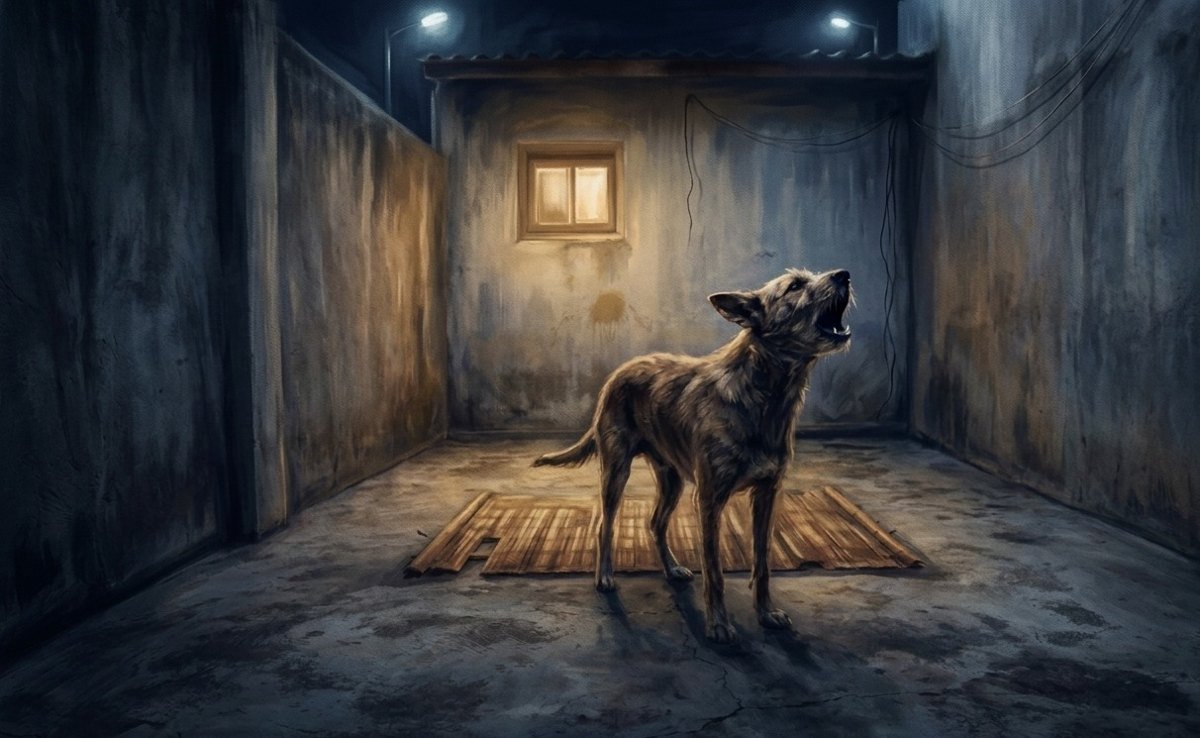
But worse than any of that, the whole night was punctuated by the sorrowful barking and howling of a dog, shut in the yard of the building next door. I had no idea what its situation was, and there was nothing I could do about it — but the sound went straight through me, and I felt very sad imagining it alone out there, much as I was in here.
So I used the other technique that works, which will surprise nobody: sending out loving kindness.
There’s a Tibetan practice called Tonglen, in which we take on another being’s suffering in the hope that they might have a better life. I won’t go into the details of it here — it would take us a long way off track, and it deserves a post of its own. But the practice of Tonglen helped me let go of my own difficulties quite significantly.
What I’m taking from it
First: growth seems to happen in two stages. There’s the conscious one, where we reason our way through why worrying doesn’t help and how to reduce the suffering that comes with it. And then there’s the much more difficult one — convincing the parts of the unconscious mind, which we have far less control over, to take the same attitude.
I think that second stage can only be done with constant repeated practice: working through things like accepting the present moment, and putting yourself into genuinely difficult situations to test it firsthand.
Second — and this is more a confirmation than a discovery — loving kindness meditation is a very powerful way to do exactly that. Possibly indispensable.
Suffice to say I’m quite grateful for the experience. I knew I would be, even while I was sitting in the cell — though knowing that and feeling it are two different things. At the time I was uncomfortable and still stressed, and gratitude was a long way from what I actually felt. Which is the same gap I’ve been describing all the way through this. It’s been a great window into the deeper parts of my mind.
And then this
The administration carried on the next day, with its own share of stress. But at some point I signed the last document, and it was over.
What surprised me was how the last stretch felt. Once the pressure was off, the people around me were simply people. One of them said he might come to Australia one day and look me up. By the time I reached the airport I was actually grateful for the good care the immigration people had extended to me — some of them turned out to be quite kind.
Which tells you something in itself. Don’t be too quick to judge a person, or you may miss the positive side of people.
The dark retreat will have to wait until I get another chance. It’ll happen one day — and it seems I got a version of it anyway, just with free accommodation.
If any of this raises questions for you, I’d be more than happy to answer them — just reply, or ask me in a class. And I look forward to catching up with many of you in our classes and retreats soon.
Peter